
On the intervening night of June 18 and 19, Jalil Akhtar, an elderly Muslim man, from West Bengal’s Bagroi village in Karandighi block of Uttar Dinajpur district, was woken up from sleep and picked up by Dalkhola police from his home, his family alleged. Other members of his household, sleeping in the same home, came to know of his arrest only the next morning.
The 66-year-old man, whose name appeared in both the 2002 and 2026 Special Intensive Revision (SIR) lists, was allegedly arrested on grounds of “being a Bangladeshi”, his family told Alt News. After spending nearly three months in various holding centres and judicial custody, when Akhtar was produced before additional chief judicial magistrate (ACJM) of Islampur court on Wednesday, September 2, the investigating officer of the case gave a written declaration that identity documents submitted by Akhtar were valid. However, Akhtar has not yet been granted bail, the court is expected to hear the matter next on September 10.
During his nearly three-month-long incarceration, Akhtar was kept in two holding centres, and then lodged in Islampur jail, until, his family claimed they were told he would be deported to Bangladesh. They further alleged that during the entire duration, police failed to prove that Akhtar’s citizenship and legal documents were fake, raising questions over why the arrest was made in the first place when his name appeared in the latest SIR list.
“My brother is an Indian, we have all the documents and he has never even seen the Bangladesh border. Yet, he was arrested, kept in holding centres and jailed on a mere suspicion of being a Bangladeshi, which the police could not even prove. Was he held for so long just because we are Muslims and live in a border district with significant Muslim population?” asked Motiur Rahaman, Akhtar’s cousin.
‘Picked up at Night without Family Being Informed’
According to his family and locals, Akhtar slept on a cot in front of his single-room home. His wife, Taufa Bibi, woke at dawn on June 19 to find him gone. She initially assumed that he might have gone to offer ‘Fazr Namaz’, but began to panic when she found his kurta hanging from the family closet.
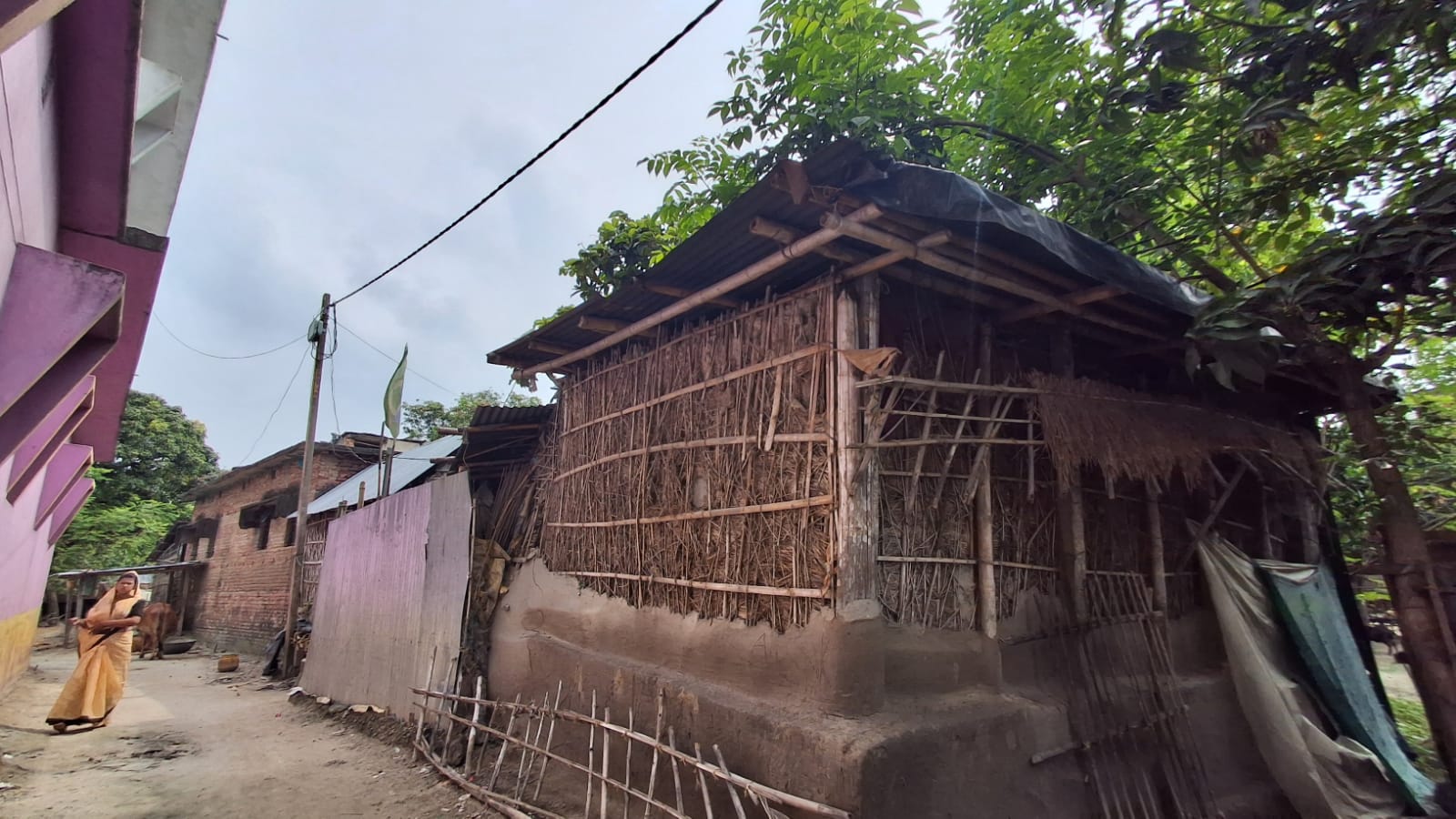
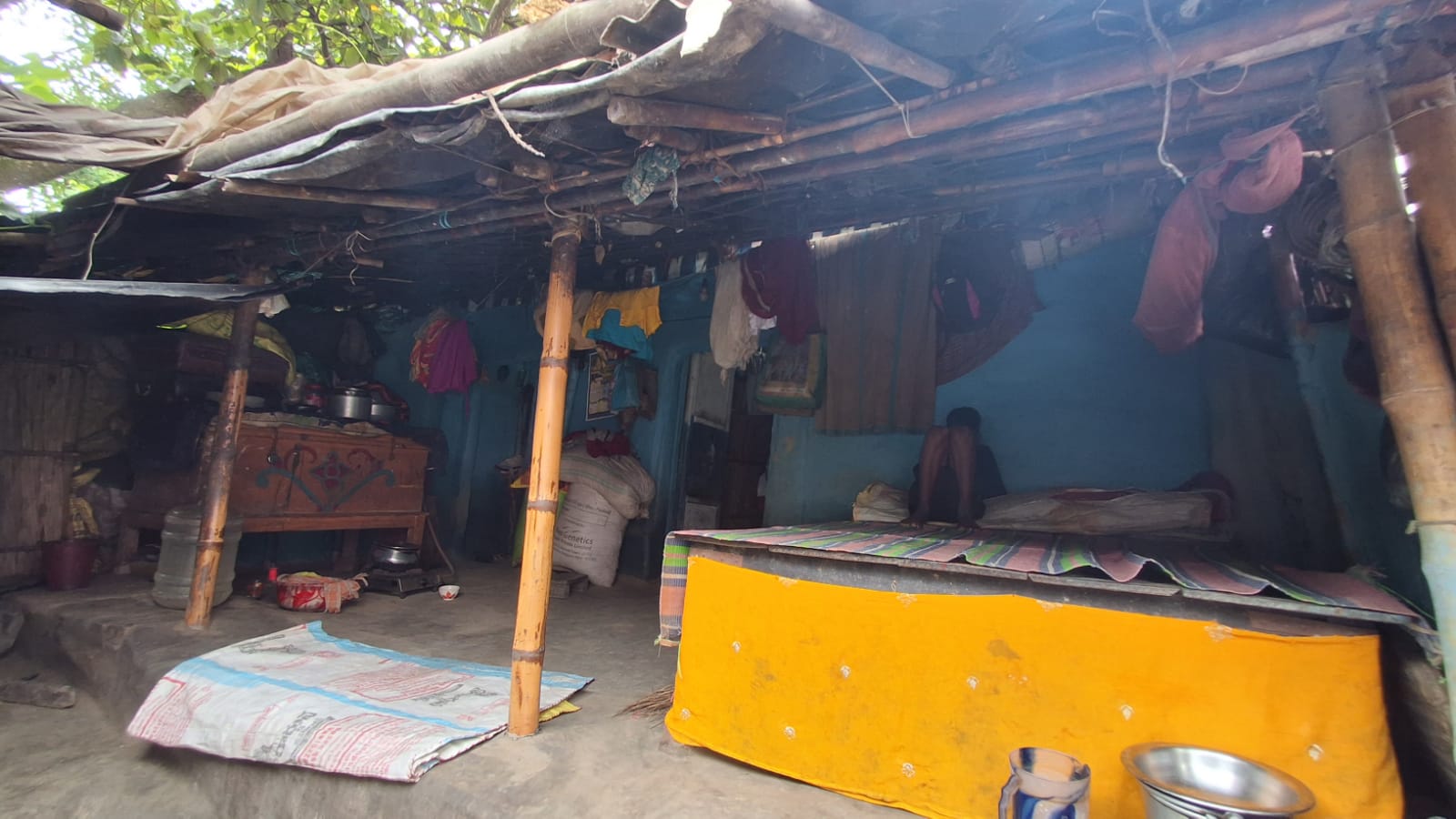
Motiur was first to launch a hunt for his cousin, a landless villager who was entirely dependent on his two migrant worker sons. Describing the long fight in detail to Alt News, Motiur said he assembled a crew of fellow villagers and they scoured through the entire neighbourhood including forest areas through the day. They were eventually informed by a local that a police vehicle had entered the village the previous night.
Upon calling one of his sources at the recently established Bazargaon police camp, which falls under Dalkhola police station, Motiur learned that the police had picked up a man from his village the previous night, allegedly identifying him as an illegal Bangladeshi immigrant. The group then reached the police outpost, and found Akhtar sitting on the floor of the lock-up, bare bodied, as the police, Motiur claimed, did not even allow him to wear his kurta while nabbing him.
Motiur further alleged that, as per Akhtar’s recollection of the arrest to his family, the police held him at gunpoint, apparently to keep him silent while taking him into custody from the densely populated area.
The Family’s Fight To Prove His Citizenship
“In the police camp we tried to reason with the officer in charge that Jalil Akhtar’s name was not only in the 2026 SIR list, but was also in the 2002 list, so he should be released. The police retorted saying ‘don’t you people dare to threaten me, those days of threatning are over…now the government has changed,” claimed Motiur.
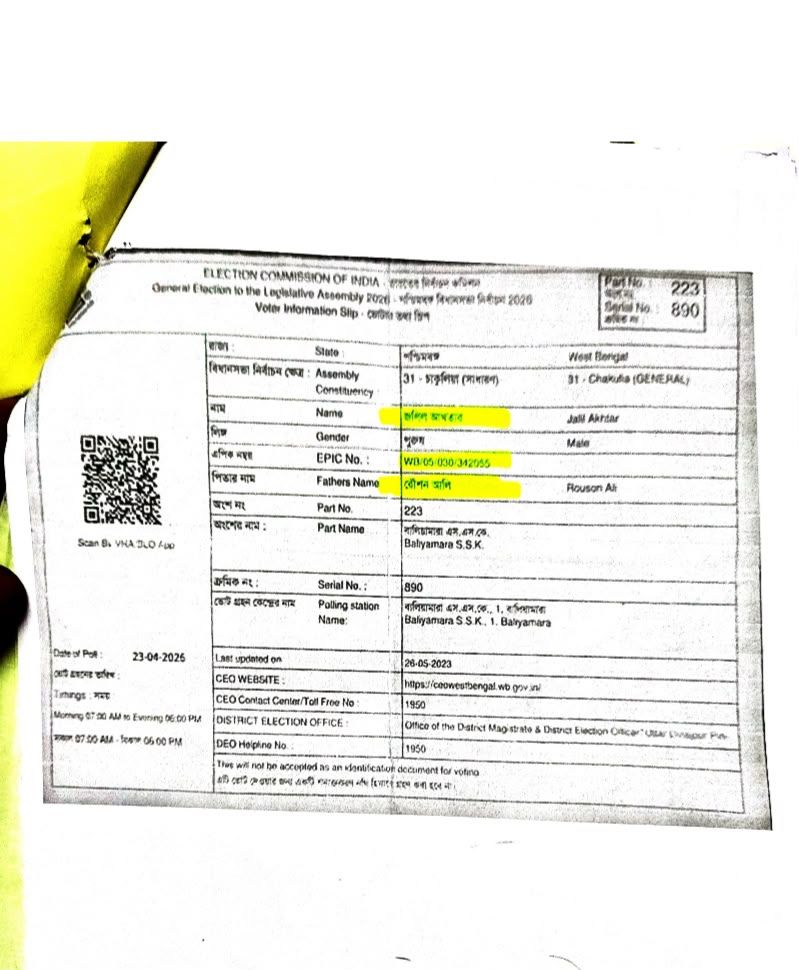
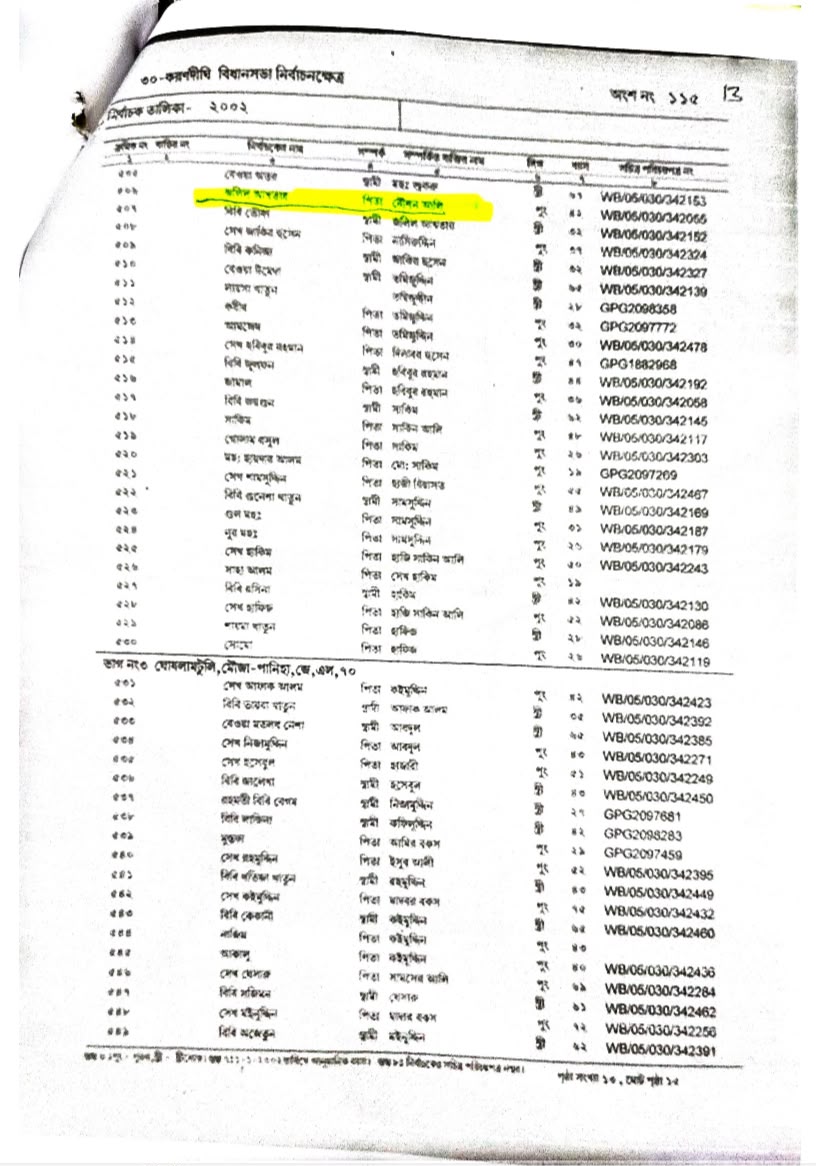
Another officer of the outpost reportedly told Motiur to give them some time to verify the documents and if everything came out clean, his cousin would be released. However, the same morning, Akhtar was moved to a holding centre in Nizampur near Chakulia.
To establish his Indian citizenship, Akhtar’s family began gathering every document they could find. According to his family, they obtained the 1995 voter list and the 2002 SIR list, both of which included Akhtar’s name. They also collected land deeds linking Akhtar to his father, Rousan Ali, as well as a residence certificate issued by the Bazragaon-2 panchayat, stating that Akhtar was a permanent resident of the panchayat area.
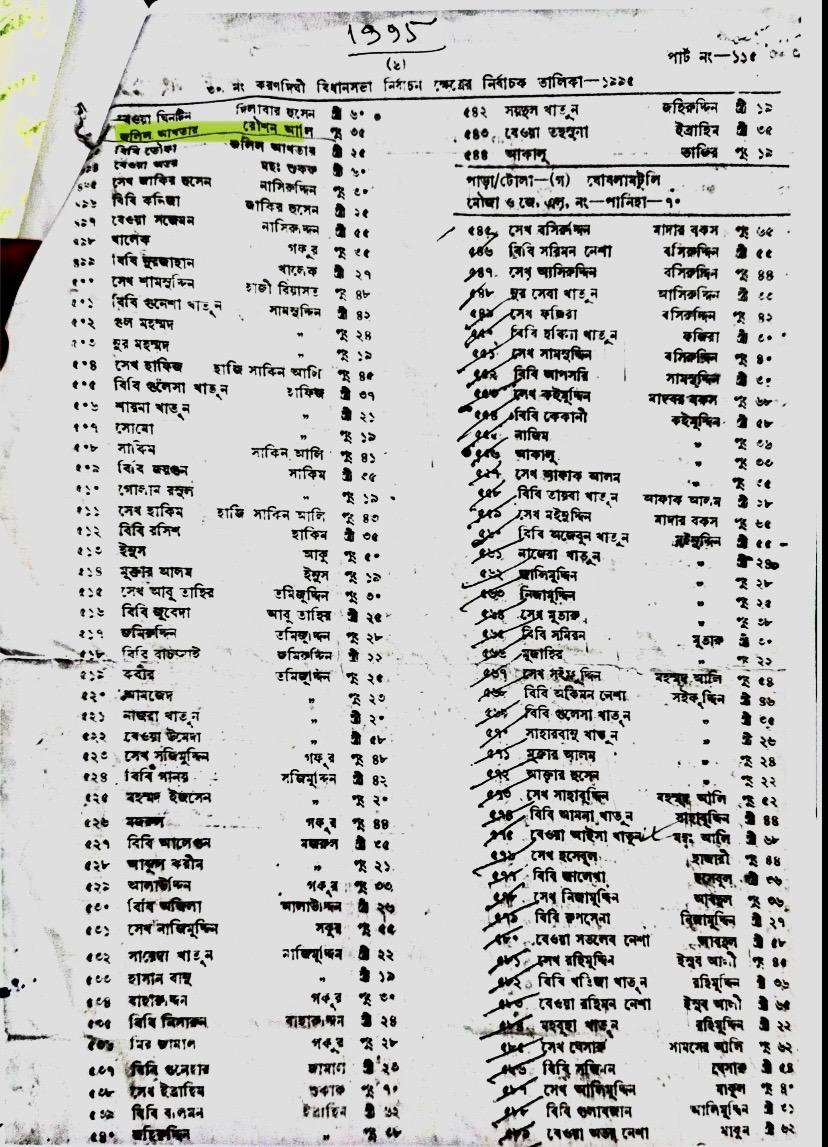
On July 9, they visited Dalkhola police station and submitted the documents for verification. Before that, they had also approached the district superintendent of police’s (SP) office. On both occasions, the police asked them to allow time for the documents to be verified and assured them that no harm would come to Akhtar if he was indeed an Indian citizen. According to his family, the police also said they were under “considerable pressure from higher-ups to identify and deport those deemed to be illegal Bangladeshi migrants”, and that they were only acting as per orders.
‘An Attempt To Send Him To Bangladesh’
However, as days went by, Akhtar remained under police custody and shifting between holding centres. Dulal Rajbanshi, organiser of the Votadhikar Surakkha Samanway Samity, an organisation formed to help those whose names were deleted in the 2026 SIR, helped Akhtar’s family. “We were able to prevent the police from sending Jalil Akhtar into Bangladesh twice. When they failed to send him into ‘no man’s land’, the police eventually filed a false FIR and produced him before the court,” Rajbanshi alleged.
According to Rajbanshi, Akhtar was moved to another holding centre near Phulbari border crossing near Siliguri, allegedly to send him to Bangladesh. The state police keeps the detainees at temporary holding centres, before handing them over to the BSF for deportation into Bangladesh, Rajbanshi claimed. He said that in Akhtar’s case, first the police handed him over to the BSF, who took him towards Phulbari to apparently deport him.
“We were informed by local sources that Akhtar was moved from the Nizampur holding centre and taken towards Phulbari on July 6. The next day, we reached Uttar Dinajpur district magistrate’s office in Raiganj, who asked us to immediately contact the SP in Islampur,” he said.
“We travelled a 110-kilometre distance from Raiganj to Islampur, where again, the SP said that he needs time to investigate, as there is “immense pressure from above to deport illegal Bangladeshis”. However, we were later told that Akhtar was brought back to the Chakulia holding centre. It was unclear what happened after this, and which border they took him to in order to attempt deportation the second time.”
However, acting on the SP’s direction, the group then met Dalkhola police station’s inspector-in-charge (IC) in the following days. “The IC asked us whether we could bring any relatives of Akhtar to the police station for verification. By that evening, we had brought even his 90-year-old aunts and all other relatives to the station. But the police did not meet them, instead, they collected the death certificate of one of Akhtar’s brothers,” Rajbanshi alleged.
According to Rajbanshi, the BSF often selects a favourable point along the border to ‘pushback’ alleged Bangladeshis, sometimes at gunpoint. “Currently, the Border Guard Bangladesh and Bangladeshi villagers are on high alert to prevent any pushback from India. As a result, many people are getting stranded in no man’s land, as neither country is willing to take them in. Akhtar’s family was wary of this exact fate,” he claimed.
According to Motiur, the IC also mentioned “immense pressure”, stating that the police were already “holding a list of 500 names whom they have to deport and 50 more were recently added”.
‘It Is Better If They Kill Me’
In the meantime, Akhtar’s family visited him at the detention centre. According to Motiur, Akhtar broke down completely. “My brother kept saying, what will I do if I am sent to Bangladesh? I don’t know anybody there. I have never been to that country. I can’t even beg there. It is better if they kill me than push me into Bangladesh,” Motiur said.
According to the family, a Border Security Force (BSF) team also visited their home to investigate the matter. “The BSF team came and spoke with us. They were infuriated by the state police’s actions — or lack of investigation — and told us that they would not deport an Indian citizen. At least the BSF came to the village to investigate. Nobody from the state police even cared to do that,” Motiur claimed.
On July 20, villagers organised a protest against Akhtar’s arrest in the nearby Rasakhowa Haat. However, before the programme could start, police intervened and dispersed them, they alleged. The next day, Rajbanshi alleged, the administration again attempted to send Akhtar into Bangladesh.
“On July 21, we received information that he had once again been moved from the Nizampur holding centre. We got the news around 2 pm and, by 4 pm, had organised a press conference at the Uttar Dinajpur Press Club in Raiganj. We shared information about the press conference across social media. We were worried that police might announce that he has gone missing. The next day, on July 22, police informed the family that they would produce Akhtar before the Islampur court,” claimed Rajbanshi.
Discrepancies between FIR and Police Submission
As per the FIR lodged against Akhtar by Dalkhola police, he was picked up from Nizampur around 1:05 am on June 20. Nizampur is also where, according to his family, he was subsequently held at a holding centre — the location is around 35 km from Akhtar’s home.
Motiur alleged that upon prodding the police on who lodged a complaint against Akhtar, police refused to reveal the name of the complainant. According to the FIR, Akhtar was detained at the Nizampur centre along with two other “illegal Bangladeshi infiltrators”. The FIR states that all three detainees are from “AndhaRahamatpur village of Thakurgaon district of Bangladesh”. It is claimed that this was revealed by Akhtar himself during interrogation.
The FIR further states that Akhtar crossed the Hili-Malda border and entered India around 24 years ago. However, the documents submitted by his family before the court show that his name appears in both the 1995 voter list and the 2002 SIR list. In both documents, his father’s name is the same. If the police account is accurate and Akhtar entered India only around 23-24 years ago, it would be impossible for his name to have appeared in the 1995 voter list, nearly three decades ago, and subsequently in the 2002 SIR list.
Alt News has seen the case diary submitted by police in court on August 5. It says Akhtar voted in 1982 elections as well, although it does not clarify which elections and where. The submission also mentions that during investigation, police had been told by locals that coming to Uttar Dinajpur in 1982, Akhtar worked as a rikshaw puller in Delhi and does not speak proper Bengali. These statements directly contradict the FIR claim that he entered India around 24 years ago and does not establish any link between Akhtar and Bangladesh.
According to the police’s submission, Akhtar was born in either 1959 or 1960 and first appears in official records in 1982. No records relating to him from before 1982 could be found, the police said. They also claim that he failed to establish a credible link with Raushan Ali, whom he identifies as his father, through land records or other documentary evidence.
However, Rajbanshi claimed that Akhtar was not required to produce his parents’ birth records to establish his Indian citizenship. “Under the Indian Citizenship Act, a person born before 1987 does not need to show the birth records of their parents to prove their Indian citizenship. The 2002 and 2026 SIR exercises were also meant to identify and remove illegal entries from the electoral rolls. Akhtar’s name appears in both lists. Yet he continues to be detained, merely to serve what appears to be the BJP’s political agenda,” he said.
The September 2 Hearing
As per legal records, the police postponed the bail hearing four times stating that they need more time to verify the documents. During the hearing on September 2, the additional chief judicial magistrate and the defence counsel asked the police to testify whether the documents provided by Akhtar were valid. The police ultimately confirmed the documents were legitimate.
According to Akhtar’s lawyer, Firoz Ahmed, the police deliberately avoided telling the court whether the former’s documents were genuine. “The ACJM pressed the investigating to state whether Akhtar’s documents are genuine before carrying on with the investigation. Even then, the IO remained silent,” he said.
Later, however, the police stated in a report submitted in the late afternoon that Akhtar’s voter ID and PAN card were genuine Indian documents, and that his records in the 1995 voter list and 2002 SIR list were also genuine. “They are awaiting an email response to verify the authenticity of his Aadhaar card, so they could not say anything about it,” Ahmed added.
“As his birthplace and his current residence are different, and fall under different police stations, the police are now harping on that, as if relocating to another place is a crime,” Ahmed alleged.
“The police had been given a target to identify and round up Bangladeshis, and they are targeting any vulnerable person they can find. Since Akhtar was born in another village, around four to five kilometres from ours, and is extremely poor and owns barely any land, it is easy for the administration to portray him as a Bangladeshi, citing a lack of evidence,” Motiur alleged.
Dalkhola Police’s Response
Alt News spoke to Sankha Chatterjee, IC of Dalkhola police station. Upon being asked whether Akhtar was arrested at gunpoint as alleged by his family, he said, “A lathi is enough for us to arrest a 66-year old. We don’t need a gun for it. As for the family’s allegation, tell them that we used a Bofors cannon to take Jalil Akhtar in custody.”
He further said that police had submitted their findings before the court. “Now it up to the court to decide whether Jalil Akhtar is an Indian or a Bangladeshi or a Pakistani or a Cuban citizen. According to our investigation, we couldn’t find any documents of Jalil Akhtar till the age of 21. All his documents are from the age of 22 till 66,” said the officer.
Alt News asked about the discrepancies between the FIR and the case diary submitted by the police before the court, however, the officer’s response did not clarify the aforementioned loopholes. Chatterjee simply said: “I don’t want to get political, but if you come to Uttar Dinajpur, I can show you people who have voter cards and other documents of both India and Bangladesh. It’s better not to get into how they were able to cross over to this side.”
Motiur, Rajbanshi and Akhtar’s family claim their efforts have helped prevent Akhtar’s ‘pushback’ till now. But the family’s ordeal is far from over. They still do not know when, or whether, he will be freed from detention and his name will be cleared in this ‘test of citizenship’. For the family, what began as an effort to establish his identity has become a prolonged battle against an administrative process that they believe is inherently designed against them.
This content originally appeared on Alt News and was authored by Anindya Hazra.

Anindya Hazra | Radio Free (2026-09-07T07:10:26+00:00) Jalil Akhtar: Valid Indian documents, cleared SIR in 2002 & 2026, yet arrested as a ‘Bangladeshi’. Retrieved from https://www.radiofree.org/2026/09/07/jalil-akhtar-valid-indian-documents-cleared-sir-in-2002-2026-yet-arrested-as-a-bangladeshi/
Please log in to upload a file.
There are no updates yet.
Click the Upload button above to add an update.